
Payment plan overview
Choosing the right orthodontic payment plans can transform a stressful financial commitment into a manageable path to a healthier smile. Whether you opt for traditional braces or clear aligners, you’ll find a spectrum of financing structures designed to fit various budgets. These plans help you spread out the cost of treatments—ranging from $3,000 to $8,000 or more—into monthly installments that align with your cash flow [1].
Most practices require a down payment upfront, typically 20–30% of the total fee, followed by interest-free monthly payments over 12 to 24 months [2]. You’ll often arrange these terms during your initial visit. If you haven’t scheduled an evaluation yet, consider booking an orthodontic consultation Charlotte to review your treatment needs and payment preferences.
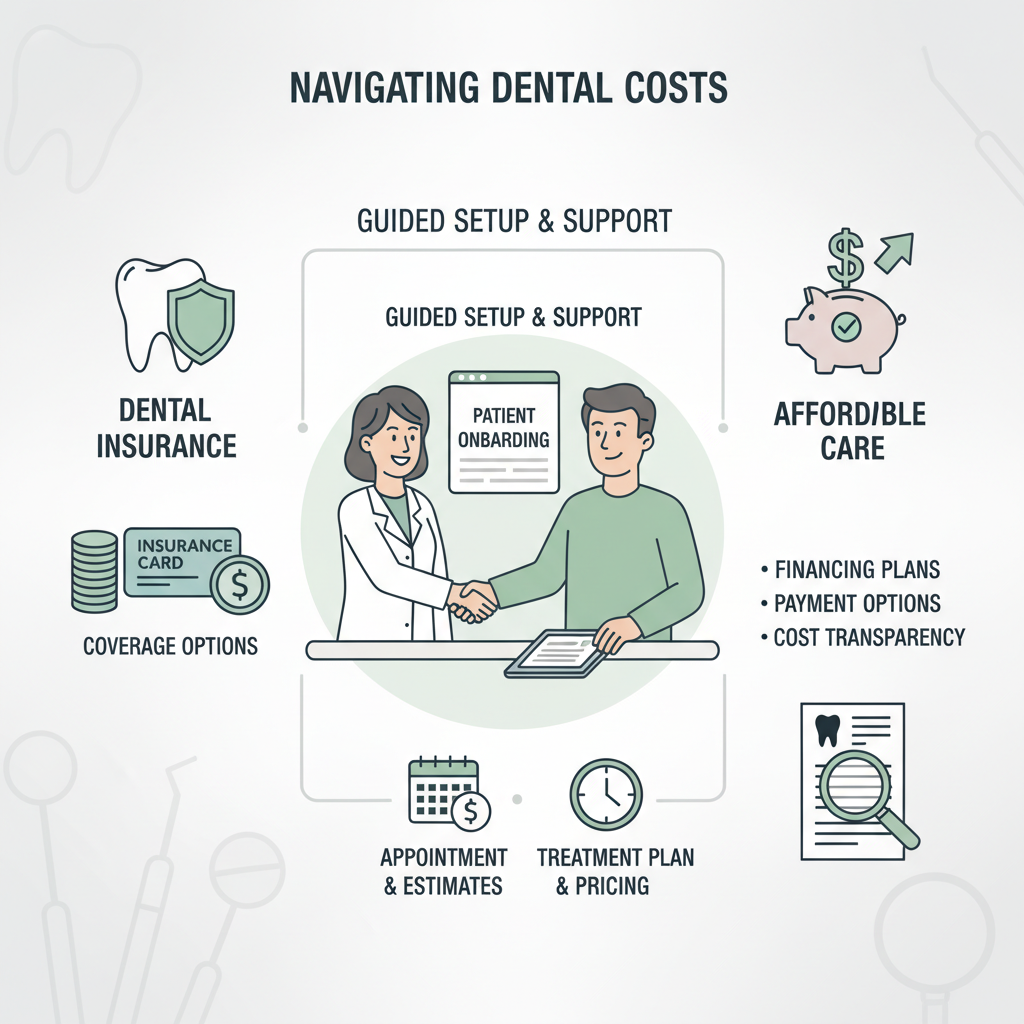
Before diving into individual options, it helps to understand the broader landscape. You can typically choose among in-house plans, third-party financing, or hybrid structures that blend the two. In addition, dental insurance, health savings accounts (HSAs), and flexible spending accounts (FSAs) can further reduce out-of-pocket costs. As you explore, keep your long-term budget and lifestyle in mind to ensure you stay on track.
In-house financing options
Many orthodontists manage payment directly through their office systems, offering in-house financing with no-interest or low-interest rates. This arrangement streamlines billing—you make payments to your provider, avoiding credit checks and third-party applications.
Typically, you’ll pay a deposit of $500 to $1,500 at the start. Then you’ll spread the balance across 12–24 monthly installments. Interest-free months mean you pay exactly what was quoted at the outset, provided you stay current. Larson Orthodontics in Alexandria, VA even lets patients begin with as little as $250 down, with monthly payments as low as $125 over up to 36 months [3].
In-house plans excel when you value simplicity and transparency. You won’t incur hidden fees, and payment history typically won’t impact your credit score. On the flip side, you may need to maintain consistent income to meet monthly commitments directly to the practice.
If you’re curious about specialized aligners, ask your provider about their aligner orthodontic system or adult clear aligners treatment options within the same financing structure.
Third-party financing solutions
When in-house plans aren’t available or don’t fit your credit profile, third-party lenders step in. Companies like CareCredit, LendingClub, and Discover offer personal loan or credit card options tailored to medical and dental expenses.
CareCredit provides promotional 0% APR financing for up to 12–24 months, after which standard interest applies. You can use the card at any orthodontist who accepts it, easily finding providers via the Acceptance Locator tool [4]. LendingClub focuses on fixed-term loans up to five years, with rates based on creditworthiness. Discover extends personal loans from $2,500 to $40,000, often with APRs comparable to other medical financing products [5].
Third-party financing tends to be more flexible, with longer terms—sometimes up to 60 months—and promotional zero-interest periods. However, if the promotional period lapses and you carry a balance, interest can accumulate quickly. Credit approval is mandatory, so rates may vary.
You can also combine a third-party loan with an orthodontic insurance plan or HSA contributions to minimize long-term costs.
Insurance and HSA benefits
A well-structured insurance policy can cover 50% or more of orthodontic expenses, up to lifetime maximums of $1,000 to $3,000. Employer-sponsored dental plans often feature higher limits and shorter waiting periods than individual plans [6].
If your policy includes orthodontic benefits, you’ll want to:
- Confirm whether braces or clear aligners qualify under your plan.
- Ask about any waiting periods before coverage kicks in.
- Verify the network status of your chosen orthodontist to maximize reimbursements.
Beyond insurance, HSAs and FSAs let you pay for braces and Invisalign with pre-tax dollars. Contribution limits in 2025 topped out at $3,200 for FSAs and $8,300 for family HSAs, potentially saving you 20–37% depending on your tax bracket [6]. Use these accounts in tandem with payment plans to stretch your dollars further.
Comparing payment structures
Evaluating your financing options side by side makes the decision process more transparent. The table below breaks down the most common orthodontic payment plans:
| Option | Typical terms | Pros / Cons |
|---|---|---|
| In-house financing | 12–36 months, 0–5% interest, down payment required | + No credit check, simple billing – Must pay directly to practice |
| Third-party financing | 12–60 months, promotional 0% APR, credit required | + Flexible terms, nationwide use – Potential high interest post-promo, credit needed |
| Combo plans | Split payments: in-house + third-party | + Customized terms, max flexibility – Requires coordination between practice and lender |
| Insurance + HSA / FSA | Reimbursement plus pre-tax funds | + Low net cost, tax savings – Waiting periods, plan limits, network restrictions apply |
Review each option’s pros and cons based on your credit profile, income stability, and long-term treatment plan.
Managing your payment schedule
Staying on point with monthly payments prevents unexpected fees and keeps your treatment on schedule. Consider these practices to simplify budgeting and avoid missed deadlines:
- Set up automatic payments through your provider or lender.
- Align payment dates with your pay periods to reduce strain.
- Keep a calendar alert or reminder for follow-up billing checks.
- Plan for occasional cost adjustments, such as retainers or orthodontic follow up visits, in your monthly budget.
Consistency matters. A single missed payment can trigger late fees or jeopardize interest-free terms. Automating payments often costs nothing and preserves your peace of mind.
Financing for specific treatments
Different orthodontic solutions sometimes come with unique payment options. By understanding these nuances, you can select the plan best suited to your chosen appliance.
Braces payment plans
Traditional metal and ceramic braces remain popular for complex cases. Average costs range from $3,000 to $9,000. Many practices bundle the cost of initial fittings, periodic adjustments, and retainers into one package.
You’ll typically see in-house financing or third-party loan options. If insurance covers braces, you might only pay $99–$250 per month after reimbursements [7]. Check if your policy has a lifetime maximum and plan your down payment accordingly.
Clear aligner payment plans
Clear aligners, such as Invisalign, often cost between $3,500 and $8,000. Many providers let you finance through the same in-house plan offered for braces. Others partner with third-party lenders to extend interest-free periods up to 24 months.
If you’re comparing options, our guide to invisalign vs braces can help you weigh cost against convenience. Teen- and adult-focused programs may offer special incentives—explore our Invisalign teen program NC and transparent aligners dentist pages to learn more.
Retainer financing
Retainers solidify the progress you’ve made during active treatment. While some orthodontists include the first set in your overall package, replacement retainers can cost $100–$500 each.
Ask about in-house payment add-ons for retainers or explore a small third-party loan if needed. Your practice may offer discounts for patients on active plans. When you schedule a retainer adjustment Charlotte appointment, inquire about bundling fees to reduce surprise costs.
Conclusion
By exploring orthodontic payment plans—whether in-house, third-party, insurance-backed, or hybrid—you gain the power to select a structure that aligns with your financial circumstances. Balancing down payments, monthly budgets, and potential tax savings ensures you can focus on the journey to a healthier, more confident smile.
If you’re ready to start, schedule an orthodontic consultation Charlotte or ask about a 3D orthodontic imaging service to map out both your treatment and payment roadmap. With the right plan, braces or clear aligners are within reach—and you can pay less stressfully, month after month.