
Understand insurance covered restorations
When you face dental issues like decay, damage, or missing teeth, knowing how insurance covered restorations work is essential to protect your smile and wallet. Insurance covered restorations refer to dental treatments—crowns, fillings, bridges, dentures, or implants—that your insurer will pay for, in part or in full, according to your policy’s terms. Reviewing your benefits early helps you avoid surprises, reduces out-of-pocket costs, and ensures you get the care you need on schedule.
Most private dental plans cover preventive care such as cleanings and exams at 100% [1]. Beyond prevention, basic restorative services like fillings or simple extractions are often covered between 70% and 80%, while major procedures such as crowns and implants may range from 50% to 80% coverage depending on your plan. On the other hand, Original Medicare generally excludes routine dental services—cleanings, fillings, extractions, dentures, and implants are not covered [2]. If you’re on Medicare, you’ll need supplemental or standalone dental insurance to fill that gap.
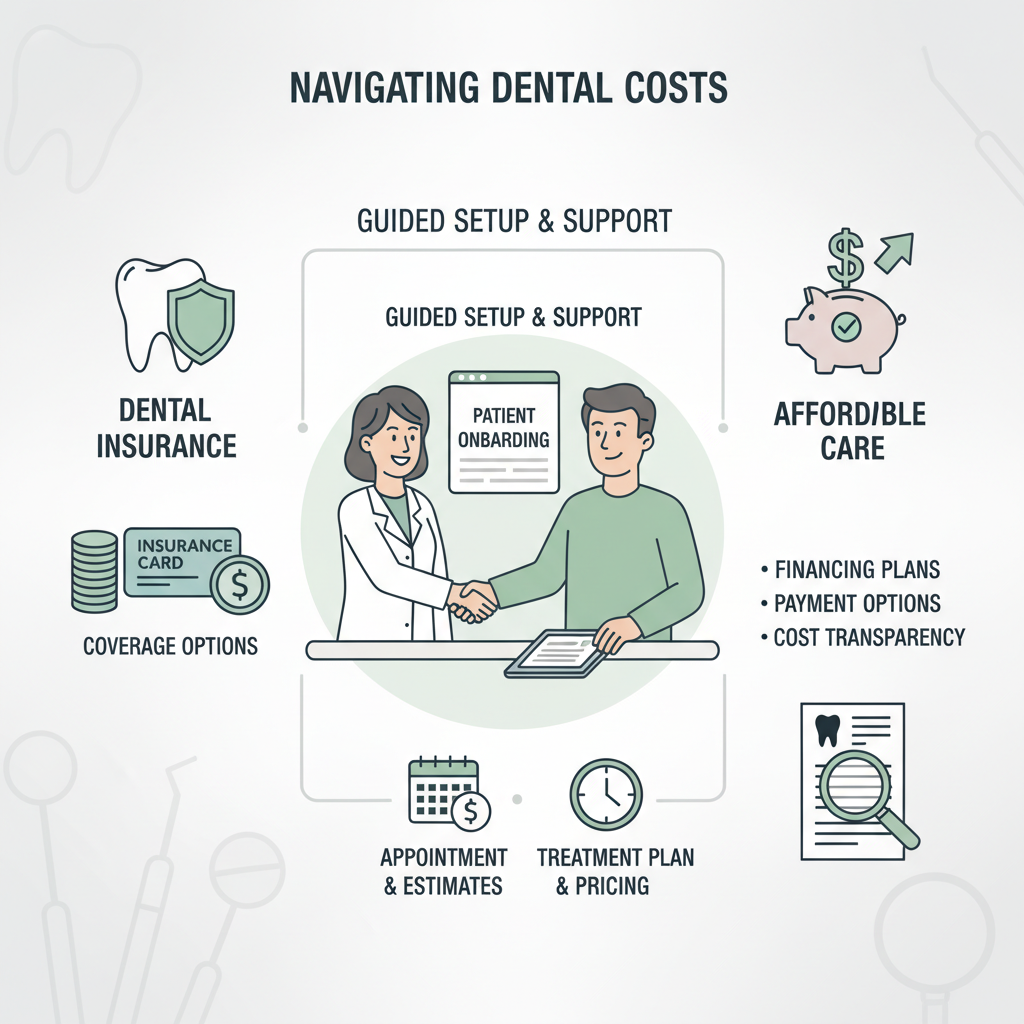
By understanding the scope of covered services, cost-sharing rules, and claim processes, you put yourself in control of your restorative dental journey. The following sections walk you through eligible restorations, cost factors, claim management, provider selection, and planning for emergencies, so you can confidently navigate insurance covered restorations.
Explore eligible restorations
Dental insurance plans categorize restorative treatments into preventive, basic, and major services. Knowing which category your procedure falls under clarifies the percentage of costs your insurer will cover.
Crowns and bridges
Crowns and bridges restore strength, function, and appearance when a tooth is cracked, weakened, or missing.
- A crown fits over a damaged tooth to protect it from further harm. For natural-looking results, ask about porcelain crown restoration.
- A bridge spans the gap of one or more missing teeth by anchoring to adjacent crowns. If you’re replacing old or failed bridges, consider bridge replacement charlotte for local expertise.
- Coverage typically falls under “major restorative” services, ranging from 50% to 80%, depending on your plan’s annual maximum and waiting period.
Many plans require you to use in-network labs or dentists for full benefits. Check your policy or ask your provider to confirm coverage before scheduling.
Fillings and inlays
When cavities or minor damage occur, fillings and inlays seal and restore the tooth’s structure.
- Composite or amalgam fillings repair small to medium decay. Many insurers cover fillings at about 70% to 80% [1]. For repairs, search for a tooth filling repair dentist.
- Inlays and onlays (indirect restorations) fit within or on the cusp of a tooth for larger defects, often classified as “major” with coverage around 50% to 80%.
- If decay reaches the pulp, root canal therapy may be necessary. Coverage for that falls under major services—learn more about root canal therapy charlotte.
Because filling materials and techniques vary in cost, verify with your dentist and insurer which options maximize coverage without compromising quality.
Dentures and implants
Full or partial dentures and dental implants address missing teeth for chewing efficiency and aesthetics.
- Partial dentures replace several teeth; full dentures restore an entire arch. Plans often cover 50% to 80% under major restorative care. Ask about custom dentures charlotte for tailored fits.
- Dental implants replace tooth roots and support crowns or bridges. Implant restoration usually requires multiple steps—surgery, abutment placement, and crown placement—each billed separately. Coverage for implants can range widely and may include waiting periods or lifetime maximums [3]. For specialized service, check implant restoration charlotte.
- If you have gaps you’d like to fill quickly, a combination of bridge and crown services can offer both function and aesthetics—see our bridge & crown services.
Because dentures and implants involve lab fees and surgical costs, discuss all anticipated charges with your dentist and insurer to avoid unexpected bills.
Assess cost factors
Your share of dental restoration costs depends on several policy elements. Understanding how they interact lets you estimate out-of-pocket expenses accurately.
Deductibles and copays
- Deductible: The amount you pay each calendar year before insurance starts covering procedures.
- Copayment or coinsurance: A fixed dollar amount (copay) or percentage (coinsurance) you pay for each treatment after meeting your deductible.
Annual maximums
Most dental plans impose an annual maximum benefit—the most the insurer will pay per year, typically between \$1,000 and \$2,000. Once you exceed that limit, all additional costs fall to you.
Waiting periods
Some plans require a waiting period (often 6–12 months) before covering major restorations like crowns, bridges, or implants. Preventive and basic services commonly have no waiting period.
Cost factor comparison
| Factor | Description | Impact on you |
|---|---|---|
| Deductible | Amount you pay annually before coverage kicks in | Delays coverage for all non-preventive services |
| Copayment | Fixed fee per visit or service | Predictable cost but adds up for multiple visits |
| Coinsurance | Percentage you pay after deductible | Higher share for major restorations |
| Annual maximum | Annual cap on insurer payments | Limits total benefits, may require paying balance |
| Waiting period | Time before certain services become covered | Can postpone major treatments |
By reviewing your benefit booklet or online portal, confirm each factor’s value and timing so that you can plan high-cost procedures when coverage is most favorable.
Manage your claim
Proper claim management ensures you receive entitled benefits without delays or denials. Follow these steps for a smoother process.
Document your needs
- Obtain a detailed treatment plan from your dentist listing procedure codes (CDT codes), costs, and the timeline.
- Ask for diagnostic images or models that justify the treatment.
- Keep all records, including X-rays and clinical notes, in case the insurer requests additional proof.
Coordinate with provider
Before treatment, request a pre-treatment estimate or predetermination from your insurer. This document outlines expected coverage and your estimated share.
Ask cost breakdown
- Procedure code and description
- Dentist’s charges
- Lab fees or material costs
- Expected coverage amount
- Your deductible, coinsurance, and copayment responsibilities
Present the estimate at your appointment to confirm both you and your provider agree on the fees and coverage.
Work with your insurer
- Submit claim forms promptly—many insurers allow online submission for faster turnaround.
- Follow up within 5–10 business days to check claim status.
- If denied, review the reason code and supply any missing information or corrected codes.
- Appeal denials when appropriate—provide letters of medical necessity or peer review documentation from your dentist.
Timely and accurate submission, combined with proactive follow-up, minimizes the risk of claim errors and out-of-pocket surprises.
Choose your provider
Selecting the right dentist or specialist influences both clinical outcomes and your benefit utilization.
In-network vs out-of-network
- In-network providers have agreed fee schedules, so benefit levels and coinsurance rates are often more favorable.
- Out-of-network dentists may charge higher fees and reimburse you at a lower percentage, leaving you with larger bills.
- Check your insurer’s directory or call customer service to confirm network status.
Verify service coverage
Before scheduling major restorations, verify with both your dentist’s office and insurer that:
- The planned procedure codes match your policy’s covered codes.
- Any lab or material vendors are in network.
- Pre-authorizations and referrals are in place if required by your plan.
For comprehensive care and seamless billing, consider a restorative dentistry clinic that specializes in procedures like crowns, bridges, and full-mouth rehabilitation.
Plan for unexpected repairs
Accidents and wear can lead to chipped, cracked, or broken teeth at any time. Planning ahead helps you respond quickly without straining your budget.
Emergency filling and repair
When a filling fails or a tooth fractures, emergency treatment can relieve pain and prevent further damage. Your plan may cover emergency visits at a higher coinsurance rate, so keep a local emergency filling & repair contact handy.
Repair broken tooth
A broken tooth requires prompt attention to avoid infection or loss. Coverage typically falls under basic or major restorative services. If you need a same-day fix, ask for a temporary crown or partial that your plan will reimburse. For local emergency and restorative support, find a repair broken tooth charlotte specialist.
Repair chipped tooth
Small chips can often be smoothed or bonded in a single visit. Many insurers cover minor repairs as basic restorative care. Search for a repair chipped tooth dentist to get fast relief and maintain your insurance benefits.
By saving funds, understanding benefit limits, and keeping provider contacts on hand, you’ll be ready to tackle unforeseen dental issues without delay.
Summary and next steps
Navigating insurance covered restorations doesn’t have to be overwhelming. You can:
- Review your plan booklet or online portal to understand covered services, deductibles, coinsurance, and waiting periods.
- Discuss treatment plans and cost breakdowns with your dentist before any procedure.
- Verify network status and obtain pre-treatment estimates to confirm benefits.
- Submit claims promptly, follow up on denials, and appeal when needed.
- Keep emergency contacts ready for urgent repairs to preserve your oral health and smile.
Armed with this knowledge, you’ll maximize your dental benefits and minimize out-of-pocket expenses for crowns, fillings, bridges, dentures, or implants. If you’re ready to restore your smile, explore specialized services—from dental crown placement charlotte to custom dentures charlotte—and work with providers who guide you through every step. Your insurance covered restorations await, so take control of your dental care today.
References
- (Copperstone Dental)
- (Medicare)
- (Cigna)