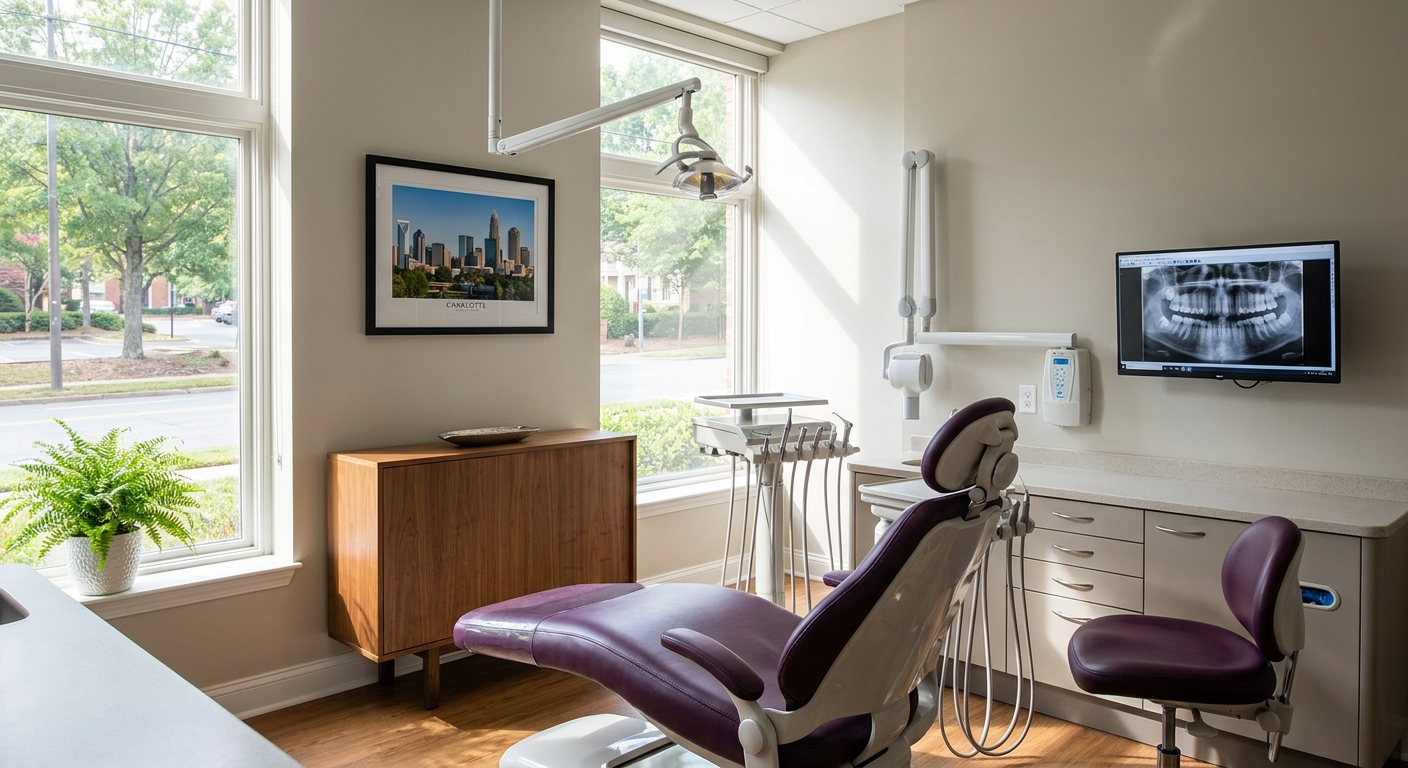

You may have put off your cleaning for two, three, or even five years. That usually isn’t because you don’t care about your teeth. More often, you’re not sure what to expect or whether it will hurt. Maybe a past visit somewhere else left you feeling rushed or judged, and you have no interest in repeating it. Before you pick up the phone to call Belvedere Dentistry, you want a plain answer to one question: what does a dental cleaning include? This guide walks you through what happens in the chair at Belvedere Family Dentistry in Charlotte, step by step. It also covers what a cleaning costs, how often you need one, and why the twice-a-year visit matters.
What Does a Dental Cleaning Include? The Step-by-Step Process
A dental cleaning includes a health review, X-rays when they are due, a gum and mouth check, removal of plaque and tartar, polishing, flossing, an optional fluoride treatment, and a final exam with your dentist. At Belvedere Dentistry, routine cleanings and exams are offered together as one service, so you leave the same visit with clean teeth and a clear picture of your oral health.
Here is the sequence most patients go through during a routine cleaning:
- A quick conversation and health review. Your hygienist at Belvedere Dentistry asks about changes in your health, your medications, and anything that has been bothering you, such as a sore spot, bleeding gums, or sensitivity to cold. This matters because some medications cause dry mouth, and conditions like diabetes affect your gums.
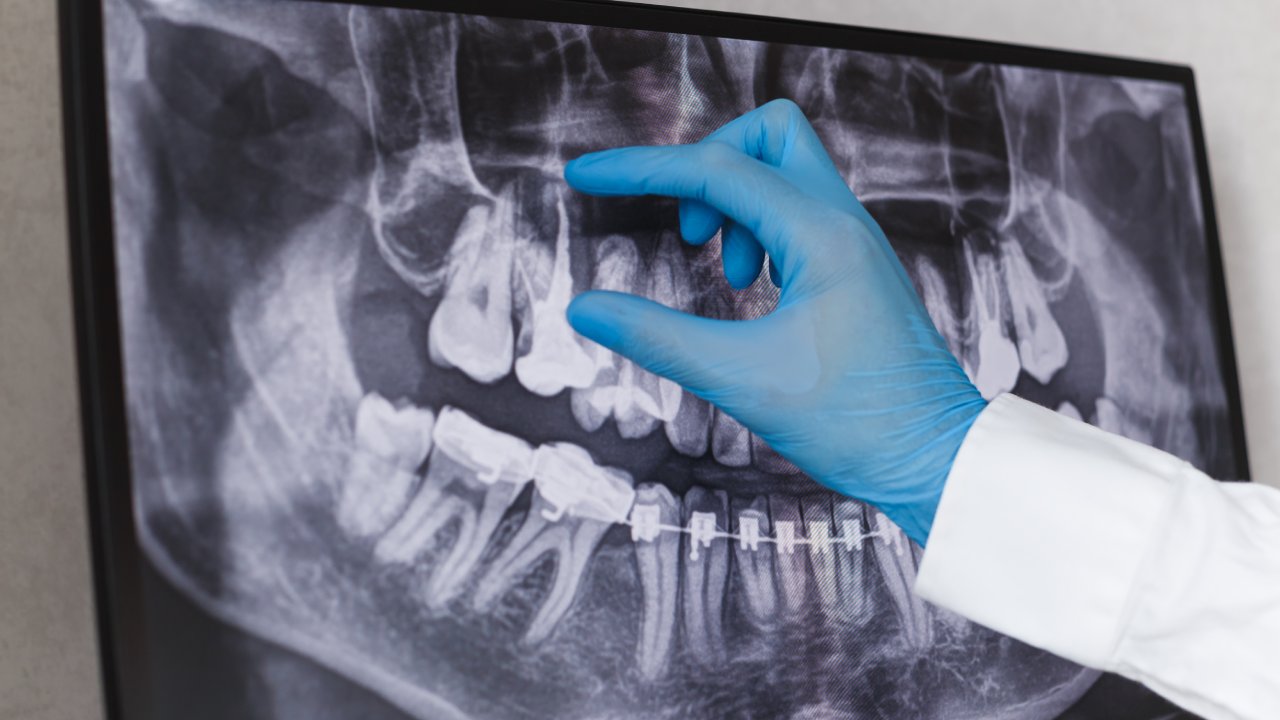
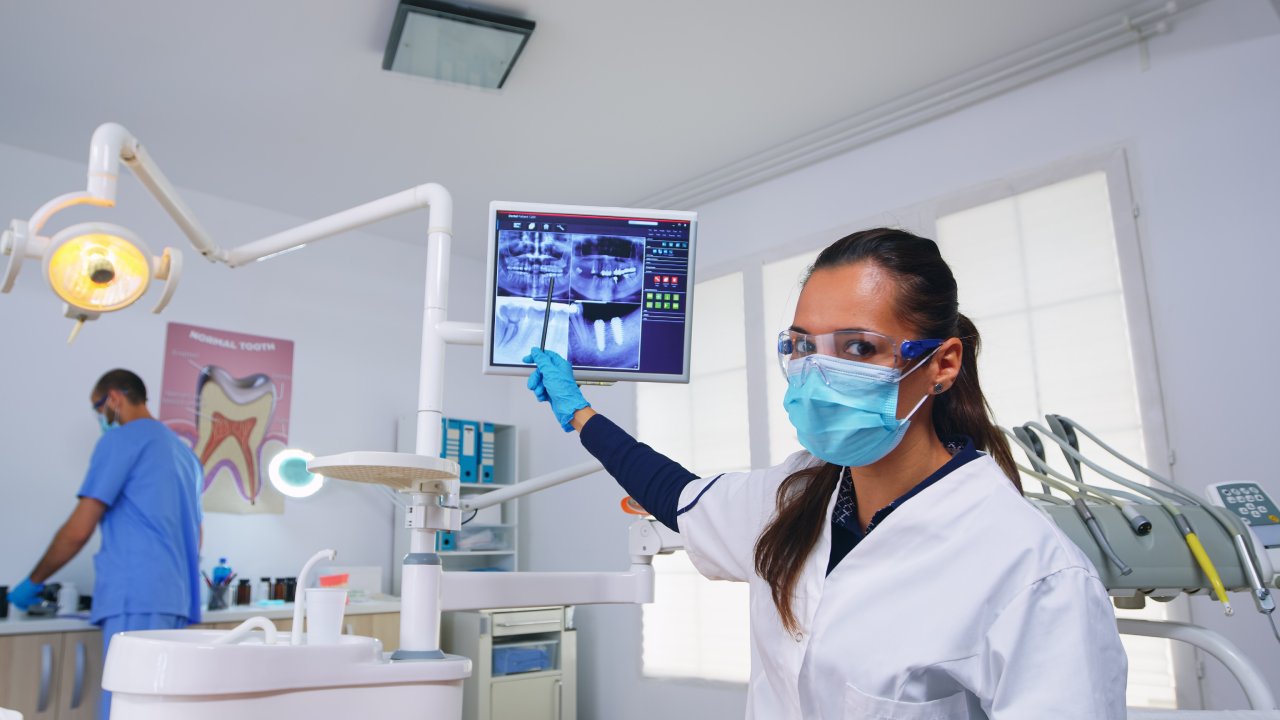
- Digital X-rays, when you’re due. You don’t need X-rays at every visit. When they are due, Belvedere Dentistry uses digital X-rays and digital imaging, which show decay between teeth and bone levels around the roots that no one can see just by looking.
- A gum and mouth check. Your hygienist at Belvedere Dentistry gently measures the small pocket between each tooth and the gum with a thin probe. Healthy pockets are shallow, while deeper pockets can be an early sign of gum disease. This is also when your oral cancer screening happens, a visual and hands-on check of your tongue, cheeks, and throat.
- Plaque and tartar removal (scaling). Plaque is the soft, sticky film that forms on your teeth every day. When it isn’t brushed away, it hardens into tartar, which you cannot remove at home. Your hygienist removes it with an ultrasonic scaler, which uses gentle vibration and water, and with small hand instruments for the tight spots.
- Polishing. A gritty paste on a soft rubber cup smooths the tooth surface and lifts surface stains. Smoother teeth also make it harder for new plaque to stick.
- Flossing. Your hygienist flosses between every tooth to clear out leftover paste and debris. This step also shows where your gums tend to bleed, which tells you where to focus at home.
- Fluoride treatment. A fluoride varnish or gel may help strengthen enamel. Your hygienist will tell you how long to wait before eating, drinking hot beverages, or brushing afterward.
- Your dentist’s exam. Your dentist at Belvedere Dentistry reviews your X-rays and gum measurements, checks each tooth, and talks you through what they found. If everything looks healthy, you’re done until next time. If something needs attention, you get a plan in plain language before anything else happens.
The exam steps matter as much as the cleaning itself. The Centers for Disease Control and Prevention reports that 47.2 percent of American adults age 30 and older have some form of periodontal (gum) disease. Many of those people feel no pain at all. Gum disease often starts quietly, with a little bleeding when you floss or slightly puffy gums, and it can progress for years before it hurts. The X-rays and gum measurements in steps 2 and 3 are how a dental team may catch it early, when it may be easier to manage.
What you do between visits matters too. A professional cleaning resets the clock, but plaque starts forming again within hours. Brushing twice a day with fluoride toothpaste, cleaning between your teeth once a day, and limiting sugary snacks and drinks may help make your next visit shorter and more comfortable. If your hygienist points out an area where tartar keeps building up, such as behind the lower front teeth, give that spot extra attention.
The Four Types of Dental Cleanings (and Which One You Need)
Now that you know what a routine visit looks like, it helps to know that not every cleaning is the same. The four types of dental cleanings are routine prophylaxis, gross debridement, scaling and root planing, and periodontal maintenance. The one you need depends on the health of your gums and how much buildup is present, not on how long it has been since your last visit.
- Routine cleaning (prophylaxis): This is the standard preventive cleaning many people get twice a year. It removes plaque and tartar above and just slightly below the gumline. It may be a good fit if your gums are healthy, your pockets are shallow, and your X-rays show no signs of bone loss.
- Gross debridement (also called full mouth debridement): This is a preliminary cleaning used when tartar is so heavy that your dentist can’t see or measure your teeth and gums properly. It clears away the bulk of the buildup so a full exam can happen. It isn’t a punishment for skipping visits but a first step that makes an accurate diagnosis possible.
- Scaling and root planing (deep cleaning): This addresses gum disease below the gumline. Your hygienist cleans tartar and bacteria from the root surfaces inside deeper pockets, then smooths the roots so your gums can reattach more snugly. It is often done one section of the mouth at a time, usually with the area numbed, and may be recommended when gum measurements and X-rays show signs of periodontitis.
- Periodontal maintenance: This is the ongoing cleaning schedule after a deep cleaning. It is more thorough than a routine cleaning and usually happens more often, commonly every three to four months, to help manage gum disease.
If you haven’t had a cleaning in several years, you might assume you’ll automatically need a deep cleaning. That isn’t always true. Some people who have been away for a long time still have healthy gums and only need a routine cleaning, perhaps a longer one. Others have enough buildup that gross debridement comes first, followed by a full exam a short time later. The only way to know is to have your gums measured and your X-rays reviewed. No one at Belvedere Dentistry will lecture you about the gap, because the goal is simply to figure out where things stand today.
Deep cleaning exists because tartar below the gumline is something a toothbrush, floss, or a routine cleaning cannot fully reach. According to the overview of gum disease treatment options published on NCBI, professional cleaning that removes plaque and tartar is a central part of addressing both gingivitis and periodontitis. When the disease has moved below the gumline, the cleaning has to go there too.
Belvedere Dentistry offers regular cleanings, deep cleanings, periodontal therapy, gum care, and laser treatments in the same Charlotte office. That means you don’t get sent to another practice for the most common gum treatments, and the team that measured your gums is the team that treats them and tracks your progress over time.
How Much Does a Teeth Cleaning Cost in Charlotte?
If you have dental insurance, a routine cleaning and exam often costs you little or nothing, because many plans cover two preventive visits a year at or near 100 percent. Without insurance, a routine cleaning alone commonly runs around $100 to $200, and the total rises when an exam and X-rays are added.
Insurance is where most of the cost question gets answered. Belvedere Dentistry accepts a range of plans, including Aetna, Blue Cross Blue Shield, Cigna, Connection Dental, Liberty Dental Plan, and Mutual of Omaha. Every plan is different, even within the same carrier. One employer’s plan may cover two cleanings a year in full, while another may count X-rays separately or limit how often certain films are taken. The Belvedere Dentistry front desk can verify your benefits before your visit, so you know what to expect instead of being surprised at checkout.
If you’re paying out of pocket, keep in mind that the prices you see online vary widely and often leave out the exam or X-rays. A complete new-patient visit with a full set of X-rays costs more than a six-month recall visit, because the first visit builds your baseline. Deep cleaning is priced differently from a routine cleaning, since it addresses gum disease rather than preventing it. Fees are commonly charged per section of the mouth, and the total for a full deep cleaning often reaches several hundred dollars or more. Belvedere Dentistry offers a dental exam and cleaning bundle that groups the core preventive services together, which makes the cost easier to understand before you book.
So why do so many plans pay for cleanings in full? Prevention is cheaper than repair. A cleaning and exam cost a plan relatively little, while a single crown, root canal, or tooth replacement can easily cost a thousand dollars or more. When an insurer covers the inexpensive visit that may catch problems early, it avoids paying for the expensive one later. The same logic works in your favor: using both preventive visits each year is one way to help keep your own dental costs more predictable.
How Often Should You Get Your Teeth Cleaned?
Many people get a professional dental cleaning every six months. If you have gum disease, diabetes, dry mouth, or a history of frequent cavities, your dentist may suggest a cleaning every three to four months instead.
The American Dental Association advises that your dentist set your visit schedule based on your own risk factors rather than a single rule for everyone. Six months works well for many people because it removes buildup before it has much time to irritate the gums, and it is a short enough window to catch a new cavity while it is still small. Think of six months as a starting point, not a fixed law.
Some people need visits more often. If you’ve been treated for gum disease, bacteria can recolonize deeper pockets in about three months, which is why periodontal maintenance usually runs on that shorter cycle. Diabetes and gum disease affect each other, so keeping your gums healthy is part of managing your overall health. Dry mouth, a common side effect of many medications, reduces the saliva that normally rinses away bacteria, so plaque builds faster. People with braces, Invisalign, crowns, or bridges may also benefit from extra visits, because those surfaces trap plaque in hard-to-clean spots.
Here’s how that plays out. Say you and your partner both book cleanings on the same day. Your gums are healthy and your X-rays are clear, so you return in six months. Your partner takes a medication that causes dry mouth and shows early gum inflammation, so the dentist suggests coming back in four. You live in the same household and came in on the same day, yet you leave with two different schedules. That is personalized care for the whole family at work, and it is why Belvedere Dentistry explains the reason behind any interval it recommends. If your schedule changes, you should understand why.
Is a Dental Cleaning Painful? What Charlotte Patients Should Expect
For most people, a routine dental cleaning is not painful. You may feel pressure, light scraping, vibration from the ultrasonic scaler, or brief sensitivity, especially if your gums are inflamed or a lot of tartar has built up.
It helps to know what “minor discomfort” actually feels like, because that phrase can sound vague when you’re nervous. The ultrasonic scaler produces a buzzing sensation and a cool mist of water, while hand instruments feel like firm scraping along the tooth. If your gums are healthy, that is usually all you notice. If your gums are tender or bleed easily, the probe and scaler can sting a little in those spots, the same way a bruise feels when pressed. Teeth that are already sensitive to cold may react to the water spray. None of this should feel sharp or unbearable, and you should always feel free to say so if it does.
Comfort-focused, anxiety-free visits are central to how Belvedere Dentistry works, especially for adults and children who have had uncomfortable or impersonal experiences elsewhere. In practice, you’re encouraged to speak up. You can ask your hygienist to explain each instrument before it touches your teeth, so nothing comes as a surprise, and you can agree on a hand signal to pause at any time. If your gums are especially tender, ask whether a topical numbing gel may be a good option for you. For deep cleanings, the area being treated is usually numbed with local anesthetic, much like a filling, so you feel pressure rather than pain.
If you’re booking for your whole family, the same approach applies to kids. Children usually do better when they know what is coming, and a calm hygienist who names the “tooth tickler” before turning it on can make the difference between a tense visit and an easy one. Sitting nearby, staying relaxed yourself, and avoiding words like “hurt” or “shot” on the way to the appointment helps too.
One more honest point: the cleanings that feel most uncomfortable are often the ones after a long gap, because inflamed gums are more sensitive and heavy tartar takes more work to remove. That isn’t a reason to keep waiting. Each regular visit after that tends to be quicker and gentler, since there is less to remove and your gums are healthier. One patient we worked with found that their second and third cleanings felt like a completely different experience from the first, though every person’s experience is different and yours may vary.
Why Dental Cleanings and Exams Matter (Beyond a Bright Smile)
Dental cleanings and exams matter because they remove tartar your toothbrush can’t, and they may catch cavities, gum disease, and signs of oral cancer early, when treatment options may be simpler, more comfortable, and less expensive.
Start with tartar. Once plaque hardens, brushing can’t remove it, and its rough surface collects even more bacteria. Left in place along the gumline, it keeps your gums irritated. As the NCBI overview of gum disease explains, gingivitis can progress to periodontitis, which damages the tissue and bone that hold your teeth in place. Regular professional cleaning may help interrupt that process before it reaches that stage.
Then there’s early detection, which is why Belvedere Dentistry pairs the cleaning with an exam and digital X-rays rather than treating them as separate errands. A small cavity caught early usually needs a simple filling. The same cavity left for a year or two can reach the nerve, and at that point the conversation shifts to a root canal, a crown, or even an extraction. For some very early enamel spots, your dentist may discuss options such as Curodont, which Belvedere Dentistry offers, though whether it fits depends on what the exam shows. The earlier something is found, the more choices you may have.
The oral cancer screening is part of the visit too. It takes only a minute or two, and you may not even notice it happening, but it gives a trained eye a regular look at tissue you can’t easily check yourself.
Finally, when something does turn up, it helps to be in a practice that can handle it. Belvedere Dentistry combines family dentistry and preventive care with cosmetic and restorative services under one roof, including fillings, crowns and bridges, root canal therapy, dental implants, and nightguards. For common procedures, that means fewer referrals, fewer new offices to get used to, and a team that already knows your history. Pairing modern dentistry with a human touch means you hear what was found, why it matters, and what your options are, in words that make sense.
Questions Charlotte Patients Ask Before Booking a Cleaning
What happens if I haven’t had a dental cleaning in several years?
You won’t automatically need a deep cleaning. Your gums are measured and your X-rays reviewed first. If your gums are healthy, a routine cleaning may be all you need. If tartar is too heavy for a full exam, a gross debridement may come first, followed by a complete exam and a plan. If there are signs of gum disease below the gumline, scaling and root planing may be recommended.
Can cavities be filled during the same visit as a cleaning?
Sometimes a small cavity can be filled the same day if there is time in the schedule. More often, the filling is booked as a separate appointment at Belvedere Dentistry so your cleaning visit stays on time and you can plan around it. Either way, you’ll know what was found and what it will cost before any work begins.
How long does a dental cleaning appointment take at Belvedere Dentistry?
A routine cleaning and exam typically takes under an hour. A first visit with a full set of X-rays may run longer. Deep cleanings are often split into two visits, each longer than a routine cleaning. When you call, the team can tell you how much time to set aside.
Do I need X-rays every time I get my teeth cleaned?
No. Bitewing X-rays, which check for decay between the back teeth, are commonly taken once a year or every couple of years depending on your risk. A full-mouth series is usually taken every three to five years or when a new concern comes up. Your dentist decides based on your history, not a fixed rule.
What’s the difference between a regular cleaning and a deep cleaning?
A regular cleaning is preventive maintenance for healthy gums, focused above and just below the gumline. A deep cleaning (scaling and root planing) is an approach to gum disease that cleans root surfaces deeper below the gumline, usually with the area numbed.
Does Belvedere Dentistry offer payment plans for dental cleanings?
Many insurance plans, including Aetna, Blue Cross Blue Shield, Cigna, Connection Dental, Liberty Dental Plan, and Mutual of Omaha plans, which are among those the office accepts, cover preventive cleanings in full or nearly in full, so cost is often less of an issue than people expect. If you don’t have coverage, or if you’re facing a deep cleaning, call before your visit and ask what payment options and current specials are available. The Belvedere Dentistry team can give you a clear estimate up front.
Your Next Cleaning Can Be the Easy One
If you’ve been putting this off, the hardest part is usually the phone call, not the cleaning. Once you know what a dental cleaning includes, what the visit costs, and that you can pause or ask questions at any point, most of the worry loses its grip. Belvedere Dentistry was built for exactly this kind of patient: someone who wants modern, comfort-focused care with a human touch for themselves and their whole family, without judgment and without surprise bills.
Contact Belvedere Dentistry in Charlotte, NC to schedule your cleaning and exam, verify your insurance, or ask about any current specials. The team will walk you through what to expect before you book, so you arrive knowing the plan.
One practical tip makes that call easier. Have your insurance card in hand and ask two questions: how many cleanings your plan covers each year, and when you’re next due for X-rays. Those two answers settle most of the cost question before you set foot in the office, which leaves you free to focus on an anxiety-free visit and personalized care that fits your family.
Experience a Professional Cleaning That Puts You at Ease
If you’ve been putting off your next cleaning or aren’t sure what to expect, the team at Belvedere Dentistry is here to walk you through every step. A thorough understanding of the process often makes all the difference in feeling comfortable in the chair. Reach out today to schedule your appointment and experience the attentive, patient-centered care that Charlotte families trust.
- This article provides general information and is not a substitute for professional dental diagnosis or advice.
- Cost ranges are estimates that vary by insurance plan and individual patient needs.
- Your dentist will recommend care based on your own examination and clinical findings.
- Results of any dental treatment vary by individual.