You want more than a routine visit. You want an expert opinion, so you search for a consultant dentist and find a word that US dental offices rarely use. Maybe a tooth problem has dragged on, or a past visit felt rushed and left you with a plan you did not understand. Now you are typing “dentist near me” into your phone, asking what is a consultant dentist, and wondering whether you even need one. The choice is simpler than the search results make it look. You can start with a general and family dentist who explains your case in plain words, or you can go straight to a specialist who focuses on one area of the mouth. This page walks through both options and their pros and cons, then offers a suggested starting point for patients in Charlotte, NC.
Here is the short version. “Consultant” is a title used in the UK and Ireland, not a US credential. In the US, specialist-level care comes from a general dentist working alongside dental specialists. What matters most is a dentist’s training, the range of care they provide, and whether they are honest when your case may be a better fit somewhere else.
What is a consultant dentist, and does the title exist in the US?
A consultant dentist is a senior specialist in the UK and Ireland, usually based in a hospital. It is not a recognized title or credential in US dentistry, so you will rarely see it on the sign of a Charlotte, NC dental office.
In UK-style health systems, “consultant” is the top level of hospital specialist training. A consultant dentist usually sees patients whom a regular dentist referred because the problem is complex, unusual, or needs hospital-level care. The word suggests seniority and deep focus, which is exactly why people search for it when they want an expert opinion. What the word should mean is an old question. The dental literature includes an article titled What is a dental consultant? that raised it decades ago.
Other countries sort dental care in their own ways. Australia’s health department, for example, describes several types of dental practitioners, from general dentists to dental specialists. Because the labels differ from place to place, a term from one country can easily confuse a patient in another.
In the US, the path works like this. Your general dentist is your home base for exams, cleanings, fillings, crowns, cosmetic work, and spotting problems early. When a case needs focused expertise, your dentist may refer you to a dental specialist. The University of Hawaiʻi at Mānoa’s dental careers guide explains that dentists who want to specialize complete more training after dental school. The specialists you are most likely to hear about include:
- Endodontists, who treat the inside of the tooth, including root canals
- Oral and maxillofacial surgeons, who handle complex extractions and surgery of the mouth and jaw
- Periodontists, who treat the gums and the bone that holds your teeth in place
- Orthodontists, who address bite and alignment concerns
So when you search for a consultant dentist in Charlotte, NC, you are really looking for one of two things. You might want a dentist who will look closely at your concern and explain it clearly, or you might want a specialist with focused training. Many patients need the first before they know whether they need the second.
How should you evaluate any dentist who offers an expert opinion?
Consider four things: who will actually treat you, what training they keep up with, what they handle in-house versus refer out, and whether they explain your options plainly without pressure. These questions work for a general dentist and a specialist alike.
A fancy title tells you very little, while the way a dentist answers your questions tells you a lot. Before you commit to a plan, ask:
- Who will treat me? You should know the name of the dentist who will examine you and do the work.
- What training do you keep up with? Dentistry changes, so ask whether the dentist takes continuing education.
- What do you do here, and what do you refer out? A good practice can tell you quickly and without getting defensive.
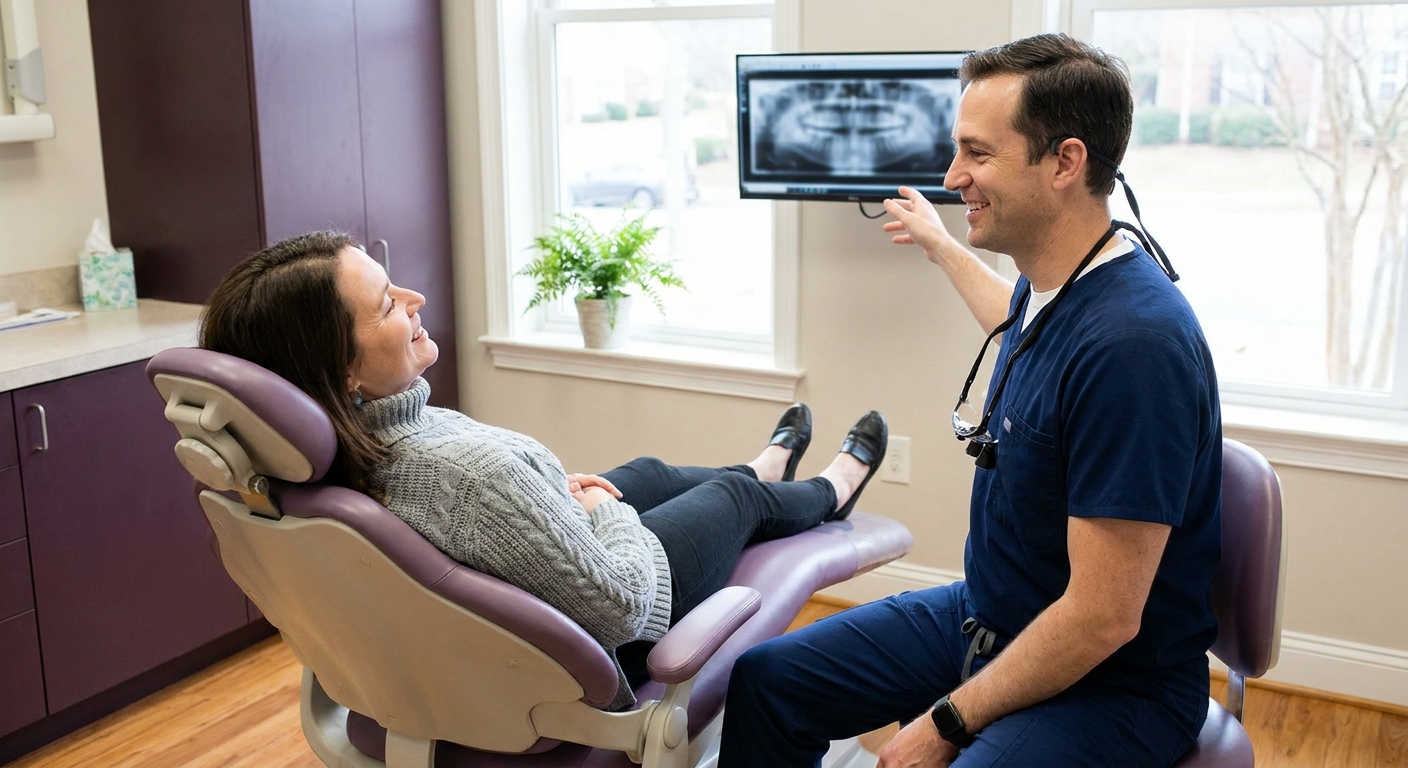
- Can you explain my options in plain words? You should leave knowing what your exam found, what your choices are, and what may happen if you wait.
- Do I have time to decide? Unless something is urgent, a trustworthy dentist gives you room to think.
Watch for these red flags too:
- Vague answers about scope. If you ask whether they handle your concern and cannot get a clear yes or no, be careful.
- Pressure to decide the same day. Being pushed into treatment before you understand it is a warning sign.
- Never referring anything out. No general practice is the right fit for every case, so a dentist who says they do everything may be stretching beyond their range.
- Explanations that leave you more confused. If you walk out unable to repeat your diagnosis, ask again or get another opinion.
- Surprise costs. If nobody will talk about what your plan costs or how your insurance applies before treatment starts, slow down.
Here is how these questions apply at Belvedere Dentistry. You will be treated by one of two dentists: Dr. Jason Bansch, the practice owner, or Dr. Alex Soderfelt, the associate dentist. Both keep their skills current through continuing education. Annie Hegmann manages the office, so scheduling and insurance questions have a clear point of contact. On scope, the practice gives a straight answer about which cases it treats and which it sends elsewhere, as you will see in the next two sections. Ask these same questions at any office you are considering.
Option 1: Is a general and family dentist in Charlotte a reasonable first stop?
For many Charlotte patients, it can be. A general and family dentist can provide the care most people need, may catch concerns early, and can tell you honestly when your case needs someone else.
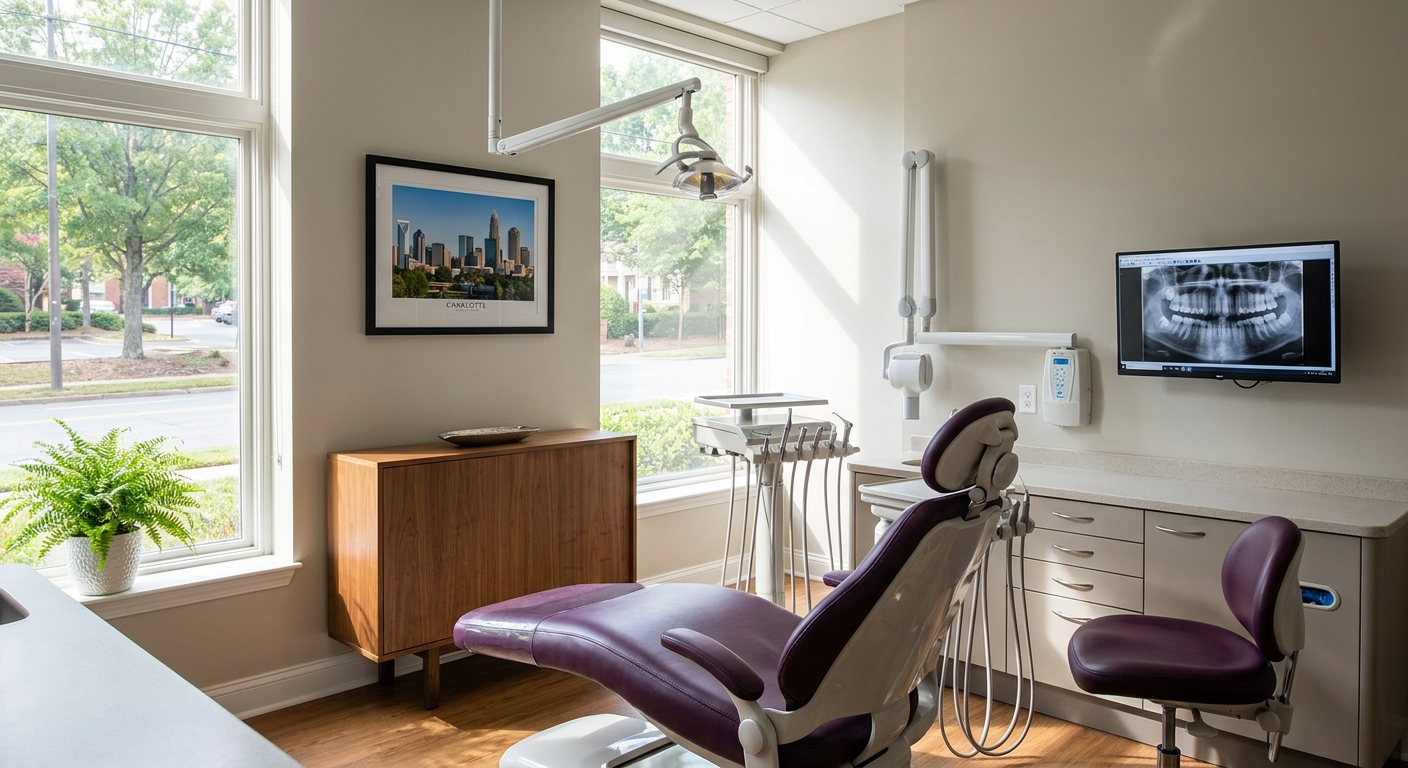
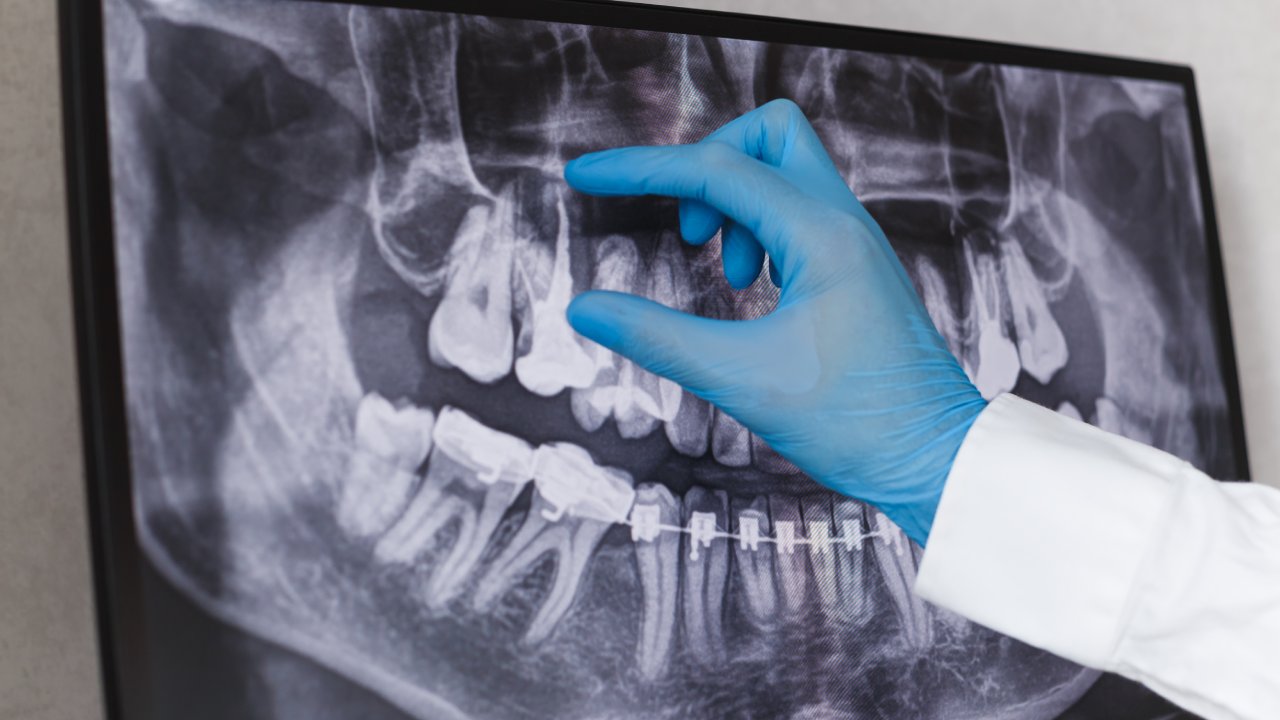
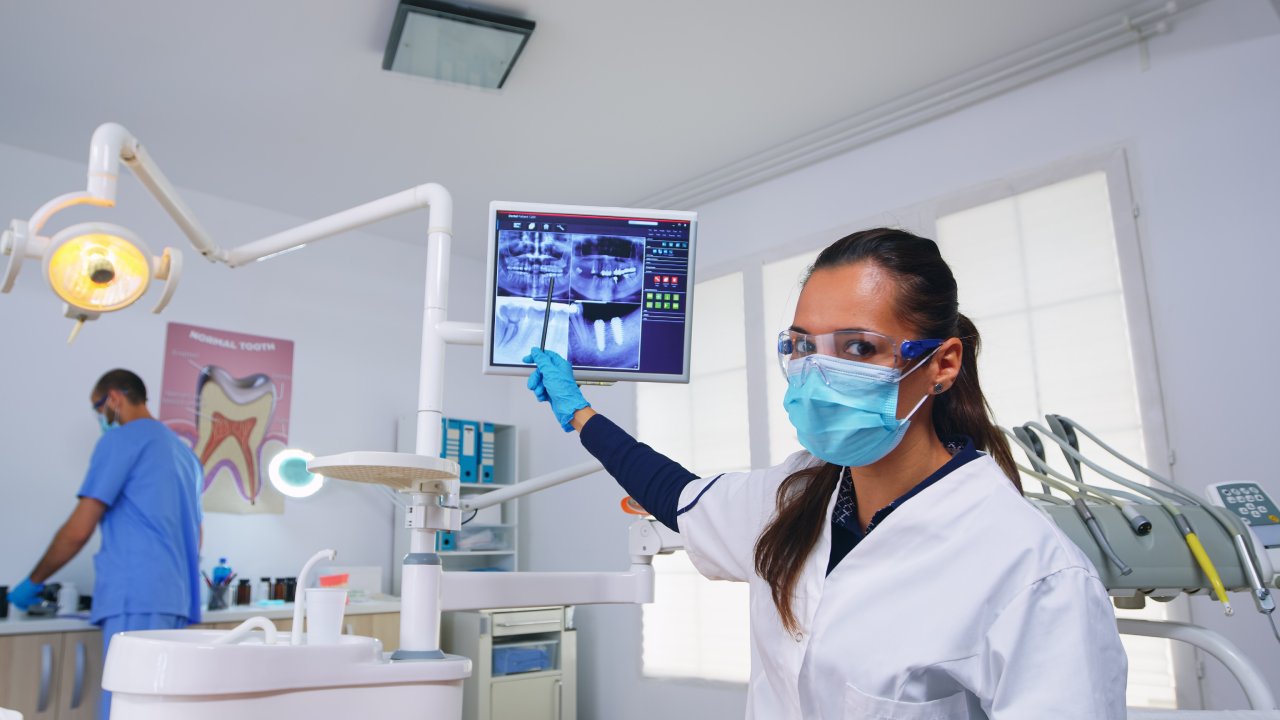
An expert opinion usually starts with someone looking at your whole mouth, not just the one tooth that hurts. A tooth that aches when you bite could involve a crack, a worn filling, or a gum concern. At Belvedere Dentistry in Charlotte, NC, the first step is an exam with digital X-rays and diagnostics, so the likely cause can be identified before anyone talks about specialists.
Belvedere Dentistry is a family dentistry practice built around personalized care for whole families. Under one roof, you can get routine cleanings and exams, preventive care, teeth whitening, porcelain veneers, composite bonding, dental implants, and crowns and bridges. Your exam is done by Dr. Jason Bansch, the practice owner, or Dr. Alex Soderfelt, the associate dentist, and both take continuing education. If you book for your whole family, your child’s checkup and your questions about a chipped front tooth can be handled by the same team, which already knows your history.
Potential pros of starting with a general and family dentist:
- One team sees your whole mouth and your whole family over time
- Many everyday, preventive, and cosmetic needs are handled without a separate referral
- Concerns may be identified at the checkup stage, when more options may be available
- You know the names of the dentists treating you and can ask them directly whether your case belongs here
Cons:
- Some cases fall outside what a general practice provides, such as visits where you need or want sedation, which Belvedere Dentistry refers elsewhere
- If your concern clearly belongs to one specialty, a general visit first can add a step
The right plan depends on your exam, since two people with the same symptom can need very different care. A family dentist is well placed to explain what your exam shows, as long as they are honest when the answer is “not here.”
Option 2: When might a Charlotte specialist referral make sense?
A specialist referral may make sense when your case needs focused training or a service your general dentist does not provide. A good general dentist tells you that up front instead of fitting you into care that is not the right match.
Belvedere Dentistry is open about where it draws that line. Patients sometimes walk in believing they can get sedation for every service. When a patient needs or asks for sedation, the practice tells them it is not the right fit and refers them elsewhere.
That honesty may be among the most useful things a dentist can offer you. Think about the alternative: a practice that says yes to everything might take on a case it is not set up to handle, and you might not find out until you were partway through. A practice that says “this one belongs with someone else” is respecting your time and comfort. When you want an expert opinion, a clear and early referral counts in a dentist’s favor.
Potential pros of seeing a specialist:
- Focused training in one area of dentistry
- Experience with complex or unusual cases in that area
- Access to services a general practice may not provide
Cons:
- Extra visits, sometimes at a different office
- Coordination between your general dentist and the specialist
- Possible separate costs, and the specialist may be in a different insurance network than your general dentist
To help a referral go smoothly, ask your general dentist what the specialist will do and why. Ask whether your records and X-rays will be shared, then check the specialist’s network status with your plan before you book. Once the specialist’s work is done, your general dentist can remain your home base for checkups and everyday care.
Can a dentist pull a rotten or broken tooth, and how do I get seen quickly for pain?
Yes, a dentist can remove a badly decayed or broken tooth, though simple cases are often handled by a general dentist and complex ones by an oral surgeon. If you are in pain, call a dental office right away, describe your symptoms clearly, and ask for the soonest opening.
Not every rotten or broken tooth needs to come out. Depending on how much healthy tooth is left, a dentist may be able to restore it with a filling, a crown, or other restorative care. The exam and X-rays help determine that. A tooth that is broken below the gumline, has an unusual root shape, or sits close to nerves is more likely to be sent to an oral surgeon.
When you call, be specific. Say which tooth hurts, how long it has hurt, whether there is swelling, and whether the pain wakes you at night. Those details help the office decide how urgently to see you. Belvedere Dentistry lists emergency dental care among its services, so contact the office as soon as pain starts rather than waiting for it to pass. The dentist will examine the tooth and explain whether your treatment can happen in the office or belongs with a specialist.
One important note on safety: if you have swelling that spreads to your face, eye, or neck, a fever, or any trouble swallowing or breathing, go to an emergency room. Those signs can point to a serious infection that needs care right away.
What if anxiety is the reason you want a second opinion?
If fear is why you are looking for another opinion, look for a team that slows down, explains each step, and lets you stay in control. Belvedere Dentistry takes this approach through comfort-focused visits, not sedation.
Sometimes the real reason behind a “consultant dentist” search is not the tooth at all. It is the memory of a visit where nobody explained anything, a dentist who seemed rushed, or a fear of pain that makes it hard to walk through the door. You may simply want someone who will listen this time.
Belvedere Dentistry’s team follows a consistent approach when a patient is nervous. They stay calm, listen to your concerns, and reassure you that feeling anxious about dental treatment is completely understandable. They explain what to expect in simple terms, answer your questions, and pass your concerns on to the dentist. They also make it clear that you can ask for a break at any point. Nobody pressures you, and in the practice’s own words, the focus is on helping patients feel “comfortable, heard, and in control.”
The practice has described one patient who was scheduled for a procedure and wanted to cancel because they were afraid it would hurt. Instead of pushing, the team listened, explained what would happen in plain words, and made sure the patient’s worries reached the dentist. That is the human touch the practice aims for: modern dentistry delivered by people who treat your fear as real.
One patient described the staff as fantastic and the office as a great environment, then summed it up this way: “I love this team here at belvedere family dentistry.” (Belvedere Family Dentistry is the practice’s legal name.) That is one person’s experience, and yours may differ.
If anxiety is part of your story, say so when you book, because a comfort-focused team can only help with what it knows about.
How do insurance and cost affect which dentist you choose?
Insurance shapes what you actually pay, so check a dentist’s network status before you book. Belvedere Dentistry is in-network with seven plans, accepts eight more, and does not accept Medicaid.
Here is what that means in plain language. When a dentist is in-network with your plan, the office has an agreement with your insurer, which usually makes your share of the bill more predictable. When a dentist accepts your plan but is not in-network, the office still works with your insurance, but your plan may pay a different share. Always confirm the details with your insurer.
Belvedere Dentistry is in-network with:
- Aetna
- Blue Cross Blue Shield
- Cigna
- Delta Dental
- GEHA
- Humana
- UnitedHealthcare
Belvedere Dentistry also accepts Ameritas, Connection Dental, Guardian, Liberty Dental, MetLife, Mutual of Omaha, Physicians Mutual, and Sun Life. The practice does not accept Medicaid.
Cost also plays into the general dentist versus specialist decision. Starting with a general dentist you already trust may spare you from paying for a specialist visit you did not need. If you do need a referral, ask the specialist’s office about your coverage before your first appointment, because your general dentist being in-network does not mean the specialist will be.
What can you do if you don’t have dental insurance?
Going without dental insurance is common, and it does not have to mean going without care. A useful first step is to call the office before your visit and ask plainly what an exam, X-rays, and a cleaning will cost if you pay on your own. A practice that answers clearly helps you avoid surprise costs and plan ahead. You can also ask whether the office offers any payment plans or sliding-scale fees. These options vary from one practice to the next, so this page cannot say that any particular office, including Belvedere Dentistry, offers them; the office can tell you what is available today.
Beyond the dentist’s office, a few other paths are worth exploring. Some people buy an individual dental plan during open enrollment, and some employers offer dental coverage that people overlook. Community health clinics and dental school clinics in many areas offer reduced-cost care, though wait times can be longer. Whatever route you take, keeping up with checkups and cleanings is often a more affordable choice over time, because small concerns generally cost less to address than larger ones. For more ideas, this guide on how to keep the cost of seeing a dentist in Charlotte down walks through your options in detail.
What is the 3-3-3 dental rule?
The 3-3-3 dental rule is an informal tip, not an official guideline. Its most common version says to brush three times a day, for three minutes each time, within three minutes of eating.
The idea behind it is simple: clean your teeth often and thoroughly so food and plaque do not sit on them for long. The general goal is a good one, but the details are not a professional standard. Most dentists today recommend brushing at least twice a day for about two minutes with fluoride toothpaste, plus cleaning between your teeth once a day.
The “within three minutes” part also deserves a caution. After acidic foods or drinks like citrus, soda, or wine, your enamel is briefly softer, and brushing right away can wear it down. Rinsing with water and waiting a little while before you brush is often the gentler choice.
You may also see “3-3-3” used online as a rule for managing toothache pain with over-the-counter medicine. Do not follow any dosing rule from the internet without checking with a dentist, doctor, or pharmacist, especially if you take other medicines or have health conditions. More importantly, pain medicine only masks a toothache, so the tooth still needs to be examined.
Is Belvedere Dentistry accepting new patients, and how do I book?
The quickest way to find out is to use the booking button on this page or contact the office through belvederedentistry.com, where the team can confirm current openings and find a time that works for you.
Office manager Annie Hegmann and the front office team are your point of contact for scheduling and insurance questions. Have your insurance card ready if you have one, so the team can check it against the plans Belvedere Dentistry is in-network with or accepts. List everyone in your family who needs a visit, since the practice cares for whole families, and add a short note about why you are coming in.
If you are nervous, tell the team when you book. They will listen, explain what to expect in simple terms, pass your concerns on to the dentist, and remind you that you can ask for a break at any point, without pressure. If you need or want sedation, say so too, because Belvedere Dentistry will tell you up front that another office is the better fit. If you are in pain, mention it right away so the office can judge how soon you need to be seen.
Still deciding? Here are the straight answers.
In short, “consultant dentist” is a UK and Ireland title, and in Charlotte, NC, an expert opinion often starts with a general dentist who is honest about scope. These are the questions patients ask most.
What is a consultant dentist?
It is a title used in the UK and Ireland for a senior, usually hospital-based dental specialist. It is not a recognized credential in the US.
Is a consultant dentist the same as a dental specialist in the US?
The closest US match is a dental specialist, such as an endodontist, oral surgeon, periodontist, or orthodontist. These dentists complete extra training after dental school in one focused area.
Can a general dentist in Charlotte give me a second opinion?
Yes. A general dentist can review your case, explain your options in plain words, and refer you to a specialist if your case needs one.
Does Belvedere Dentistry offer sedation?
No. Belvedere Dentistry refers patients who need or ask for sedation elsewhere, and it tells them up front.
Which dental insurance plans does Belvedere Dentistry take?
Belvedere Dentistry is in-network with Aetna, Blue Cross Blue Shield, Cigna, Delta Dental, GEHA, Humana, and UnitedHealthcare. It accepts Ameritas, Connection Dental, Guardian, Liberty Dental, MetLife, Mutual of Omaha, Physicians Mutual, and Sun Life. It does not accept Medicaid.
What are red flags when choosing a dentist?
Watch for vague answers about what the office treats, pressure to decide the same day, unclear costs, and an unwillingness to refer you out when your case is outside their range.
Where might most Charlotte patients start?
Many patients start with a general and family dentist who is honest about what it treats, and consider a specialist referral if their case calls for one. That order can give you a diagnosis, a home base for your whole family, and a specialist when your exam points that way.
Going straight to a specialist may make sense if you already know which specialty handles your concern. Many people do not know that yet. They have a symptom, a worry, or a plan from another office they are unsure about. A general dentist who looks at your whole mouth, explains what they see, and tells you plainly whether they can help is the kind of expert opinion many patients are searching for.
For families and individuals in Charlotte, NC, Belvedere Dentistry is one option to consider. The practice offers preventive, family, cosmetic, and restorative care under one roof, runs comfort-focused visits built around listening and keeping you in control, and tells you up front when a need like sedation means another office is the better fit. Because every case is different, your plan will depend on what your exam shows.
You can book a first visit with Belvedere Dentistry at its Charlotte, NC office through the booking button on this page, and bring your questions about your tooth concern and whether you may need a specialist.
Not Sure Who Should Look at Your Case?
If you have been told you might need a specialist, or you simply want a second set of eyes before committing to treatment, it is reasonable to start with a conversation. The team at Belvedere Dentistry in Charlotte, NC can talk through your situation and help you understand what kind of opinion makes sense for you. Reach out to the office and take the first step toward clearer answers.
Every mouth is different, and individual experiences and outcomes vary.